

How To Clean Up Green Pool Water
Let's face it. Life gets crazy, and sometimes we let sure cleaning chores slide. Pools demand daily care, but they oftentimes go neglected when there are other pressing matters at mitt. Unfortunately, the longer a pool is ignored, the dirtier it gets until your scientific discipline teacher's favorite greenish microorganism moves in.
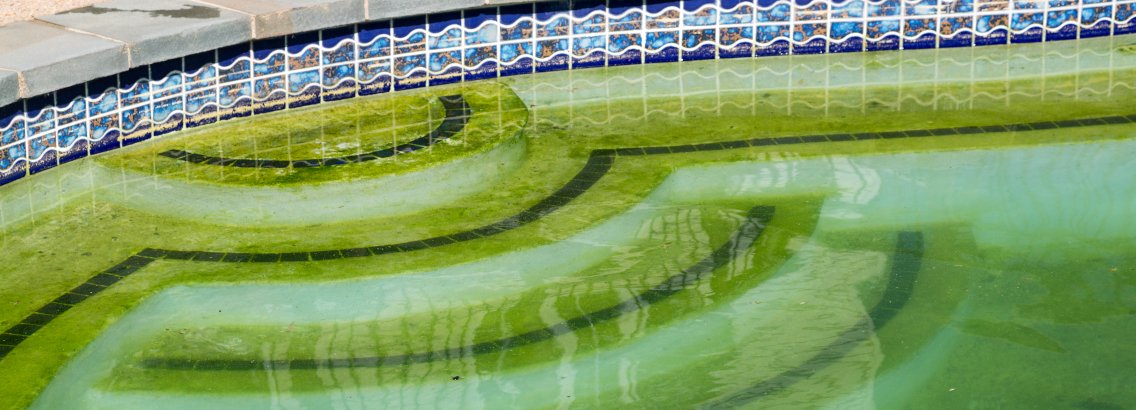
Yep, that's right. You lot've got algae!
How algae grows
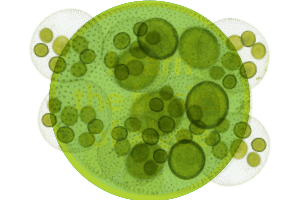
It doesn't take long for algae to take off and "bloom." Depending on temperature, contaminants, sunlight, and circulation, algae can bloom in a thing of hours, days or weeks. At temperatures below 51 degrees F, information technology won't grow, so it's safe to cover the puddle and let it hibernate until the thermometer rises in jump.
Algae doesn't need much to thrive. There are many unlike types of these tiny critters that are loosely lumped into the plant kingdom. Their green color comes from chlorophyll, which is used for photosynthesis. If yous retrieve from your science classes, photosynthesis occurs when carbon dioxide is taken in and oxygen is expelled.
All algae needs is some dominicus and food, and it tin hands thrive in well-nigh any still body of water. Pools have an abundance of food for algae, especially those with lots of debris and dissolved solids. They fifty-fifty feast on chlorine, which is why they can accept over when chlorine levels aren't maintained.
What's so bad nigh algae?
While non toxic to swimmers in and of itself, algae can cause other problems such as hosting bad leaner like East-coli. They can also reduce visibility for divers who are attempting to rescue a person or pet. It can clog up pores in puddle filters which can render them useless. It tin eat into pool surfaces and stain them.
Since they're microscopic, they can hands hide out in crevices, behind pool ladders, nether pool liners, etc. So basically, you have to be vigilant to forestall it in the first identify. An ounce of prevention is worth 15 thou gallons in the case of keeping algae out of pools.
Vi steps to wiping out algae
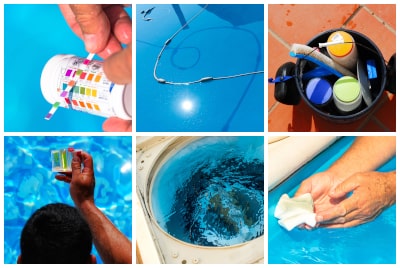
Depending on the level of algae bloom and filth, there are 6 bones steps involved in cleaning a green pool. Nosotros'll get into more particular below.
- Debris removal
- Test pH balance & CYA
- Shock the puddle with chlorine
- Brush, pump & filter the puddle
- Test chlorine levels
- Continued maintenance
Footstep #one: Remove the debris
If you lot tin't see at least 6-8 inches below the h2o's surface, call a professional. The pool will need to exist drained and acid-washed. If you can see six-viii inches beneath the surface, whorl up your sleeves and get busy.
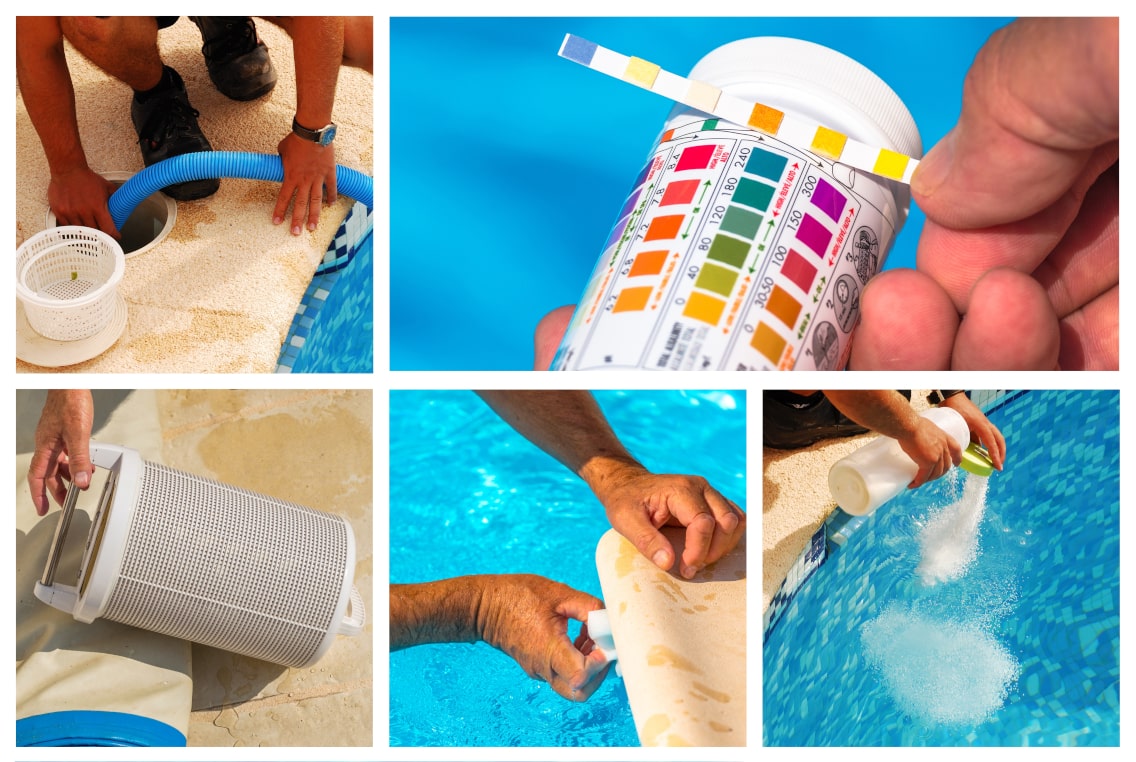
Beginning yous demand to remove equally much droppings equally you peradventure can. This volition take abroad the algae's food source and aid the chlorine work improve. You'll need a scope pole. Start by skimming the surface with a skimmer net on the scope pole.
Switch the skimmer to a deep pool net and remove all the large debris from the puddle'due south lesser. Information technology may be hard to see information technology if the water'southward very cloudy, but go along at it until you don't see any substantial debris in the internet.
Read our pool cleaner reviews to notice all the cleaning tools you'll need.
Step #ii: Examination the pH, CYA & gratis chlorine
Y'all tin use a fancy test kit or cheap examination strips. Your platonic pH is seven.2 or below. If it's too high, you'll demand to add together muriatic acid (a gallon at a time) or a prepared pH decreaser. Getting the pH low enough volition minimize water cloudiness afterwards the next step.
You should also test for CYA (cyanuric acrid). You can get special test kits for this. CYA is like sunscreen for your chlorine. If it's lower than 30 ppm, the sun will break down the Free Chlorine needed to go along algae at bay. To calculate how much CYA you demand, use this handy PoolMath Estimator, which likewise helps calculate other measurements like pH, salt, etc.
If CYA is too high, you'll take to remove puddle h2o and supercede with fresh. Employ the PoolMath Computer to determine how much water yous'll need to remove/replace. Now examination for free chlorine with an FAS DPD test kit. Utilise this CYA – Chlorine Nautical chart to make up one's mind how much gratis chlorine you need to achieve shock level.
Stride #three: Daze the puddle
No, this doesn't involve electricity. Basically, it'south adding a bunch of chlorine, but y'all don't only pour a bottle in and walk away. After your pH is adjusted to 7.2 or below, become a 25 pound saucepan of granular chlorine. It may seem similar a lot, simply information technology'll salvage money buying information technology similar that in bulk since you'll need chlorine on hand for regular adjustments.
When you lot determine how much chlorine y'all'll need, toss the proper amount of granules out evenly over the water, kind of similar you're feeding corn to chickens. Note: Don't feed chlorine granules to chickens. You can besides utilise liquid chlorine. Walk effectually the pool's perimeter to toss or pour information technology in so you become chlorine in each surface area. Let the pool filter pump run to distribute the chlorine throughout the water.
Notation: Go on the pump and filter running from this indicate until the puddle is totally clear.
Test the free chlorine again afterward an hour, and if information technology's at or above shock level, that's skilful. Keep testing every few hours, at least twice a day, adding more chlorine when needed with the pump running, until the h2o is crystal clear. This could have a few days depending on the severity of algal growth.
Step #4: Brush, pump and filter the pool
Virtually 24 hours later adding chlorine, you'll see a drastic difference. Your puddle will most likely non exist green anymore, but will probably still be cloudy due to all the expressionless algae. Go along the pump running. Castor the walls, ladders, and steps to dislodge any stuck algae and then it can be filtered out.
To remove dead algae that sink to the bottom of your pool, use a manual pool vacuum or run a robotic puddle vacuum until the water is crystal articulate. Clean your pool filter and vacuum filter bags a few times a day during the stupor process.
Step #5: Test for overnight chlorine loss
Subsequently the water is clear and yous've thoroughly brushed and vacuumed the pool, perform an overnight chlorine loss examination (OCLT) to see if there are whatsoever algae left. Sunday and algae will both deplete your chlorine. So examination the costless chlorine after sundown and the next morning before the sun comes up.
If you detect a loss in gratis chlorine, then you lot'll know there are still algae, and so keep the pool at shock level for chlorine the next 24-hour interval. Repeat the OCLT the side by side nighttime and earlier sunup the next mean solar day. When your gratis chlorine level remains the same or has only dropped less than ane point, then you tin let the chlorine return to target level.
Step #half dozen: Ongoing maintenance
At present that you've rid the pool of its tiny green invaders, keep information technology that style! Make sure you test your pool water consistently, preferably once a day, but at least once per calendar week. Stock up on all the pool chemicals you'll need to make adjustments when needed. Keep your gratis chlorine, CYA and pH in acceptable ranges. Invest in a good chlorinating system (either a floater, in-line or salt organization) to continue an adequate level of chlorine in the pool at all times. Brush and vacuum the pool at least once a week. Clean your puddle filter regularly and upgrade if needed.
Consider buying an automatic pool cleaner to make things more user-friendly. Nosotros have several top-rated models listed here so check them out to see which one would be best for your pool.

Source: https://cleanup.expert/info/how-to-clean-green-pool/
Posted by: waltersextralas.blogspot.com
0 Response to "How To Clean Up Green Pool Water"
Post a Comment